Whale Watching: Big Boat vs Zodiac
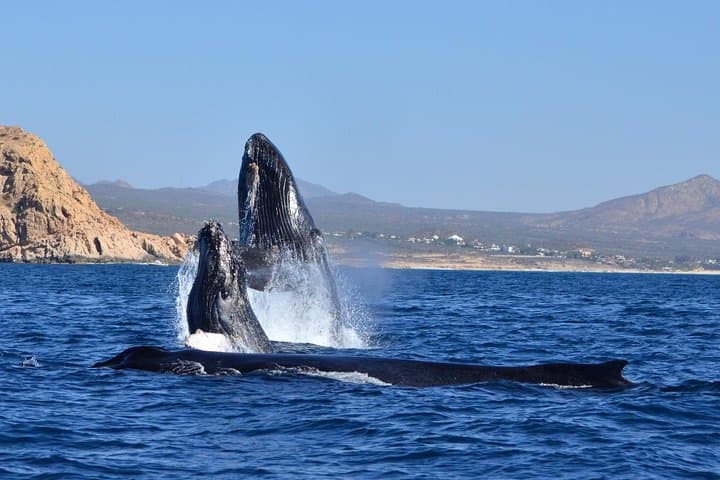
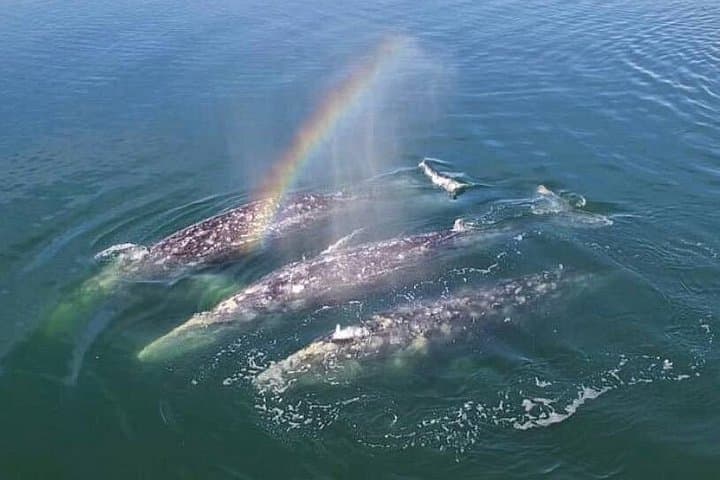
Cabo's whale season runs December through April, and you're almost guaranteed to see humpbacks and grays breaching in the channel. The real choice is how you want to see them: from a stable catamaran with a bathroom, shade, and a breakfast spread, or from a Zodiac that puts you three feet off the water when a 40-ton animal surfaces next to your boat. One is comfortable and family-friendly. The other is raw and immediate.
Catamaran / large boat
The catamaran option is a two- to three-hour trip out of Cabo San Lucas or San José del Cabo on a boat with a deck, a bathroom, and usually breakfast or drinks included. You're higher off the water, which means better sightlines across the channel when whales breach in the distance, but less visceral when they surface close. Some trips include a marine biologist; many don't. The ride is stable, the vibe is social, and you can bail to the shade or the galley if the sun or the waiting gets old.
Why you'll love it
- Stable deck reduces seasickness risk — critical if you're prone to motion sickness or bringing kids
- Onboard bathroom and galley mean you're not trapped for three hours with no facilities
- Shade structures let you escape the sun between sightings
- Higher vantage point gives you a wider view of the channel when whales are breaching far out
- Private yacht options let you control the schedule and avoid crowded boats during peak season
Worth knowing
- You're watching from 8–12 feet above the water, so close encounters feel more distant
- Crowded boats during February and March mean blocked sightlines and noise
- Educational quality is inconsistent — many trips have no naturalist, just a captain calling out blows
- Slower repositioning when whales move to a different part of the channel
Best for: Families with young kids, first-time whale watchers, anyone prone to seasickness, or groups who want the social experience and onboard amenities more than they want to be soaked by spray when a whale surfaces.
Zodiac / small boat
The Zodiac is a rigid inflatable that sits low in the water, usually capped at 10–12 people, and almost always led by a marine biologist. You're at eye level with the whales when they surface, and the boat repositions fast when animals move. The trade-off is exposure: no shade, no bathroom, and every swell hits harder than it would on a bigger boat. When a humpback breaches 30 feet from your bow, you feel the spray and hear the exhale — it's immediate in a way the catamaran isn't.
Why you'll love it
- Eye-level proximity makes encounters visceral — you're in the whales' environment, not watching from above
- Marine biologist on board explains behavior patterns, breach sequences, and competitive pods in real time
- Small group size (under 12) means clear sightlines and less crowding
- Faster boat repositioning when whales move to a different zone
- Hydrophone options on some trips let you hear humpback songs underwater
Worth knowing
- Rough ride in afternoon wind or Pacific swell — not for anyone prone to seasickness
- No bathroom or galley, and trips run 2.5 to 3 hours minimum
- Zero shade — you're in full sun the entire time
- Wet ride when seas pick up or whales surface close and splash the boat
Best for: Anyone who wants the closest legal approach to whales, prioritizes learning over comfort, and can handle open water without a bathroom or shade for three hours. Also the right choice if you've done a whale tour before and want the real thing this time.
The verdict
If you want to see whales and also want a comfortable morning on the water, take the catamaran. If you want to feel what it's like when a 40-ton animal exhales ten feet from your face, take the Zodiac. The catamaran is the right call for families, first-timers, or anyone who values stability and onboard amenities. The Zodiac is for people who can handle discomfort and want the encounter to be immediate and educational. The exception: if you're traveling with someone prone to seasickness or young kids who need a bathroom, the Zodiac will ruin the trip no matter how close the whales get. In that case, book a private catamaran with a marine biologist and get the best of both.
Either way
- Book sunrise departures — whales are most active early, and the water is calmer before 11 a.m. wind picks up
- February and March are peak migration months, but also peak crowding — December and April see fewer boats
- Bring reef-safe sunscreen, a hat, and polarized sunglasses — glare off the water makes spotting blows harder
- If the captain says a whale is logging (resting at the surface), stay quiet and still — noise drives them under
- Check cancellation policies before booking — whale tours scrub frequently in high wind or rough seas
The picks, up close